Helianthus tuberosus
 |
 |
 |
 |
||
Photos, Renee Brecht |
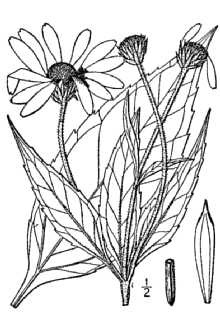
Britton & Brown |
| Botanical name: | Helianthus tuberosus |
| Common name: | Jerusalem artichoke |
| Group: | dicot |
| Family: | Asteraceae |
| Growth type: | forb/herb |
| Duration: | perennial |
| Origin: | native |
| Plant height: | 10' |
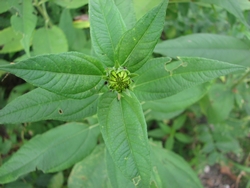
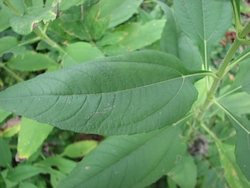
| Foliage: | Leaves and stems are rough, branched to as wide as 5 feet. Leaves opposite on lower part of stem, alternate higher up, ovate, 5-10" long |
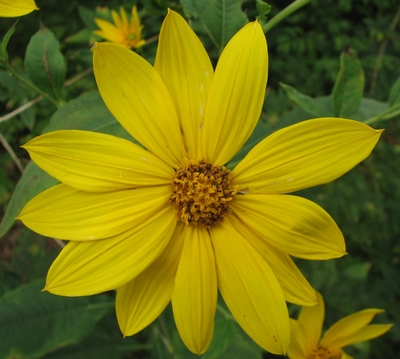
| Flower: | Numerous yellow flower heads, 3-4" across with 10-20 rays |
| Flowering time: | late August-September |
| Habitat: | rich, damp thickets, moist, disturbed sites |
| Range in New Jersey: | Cape May, Cumberland counties; Burlington and central Jersey |
| Heritage ranking, if any: | n/a |
| Distribution: |  |
| Misc. | The tuberous roots are edible and were cultivated by Native
Americans. It is also used in Germany to produce a liquor, "Topinambur"
and by industry as a source of fructose. Attractive to butterflies; seeds eaten by finches and other songbirds. Although native, it can become weedy in a garden. |