Osmunda regalis
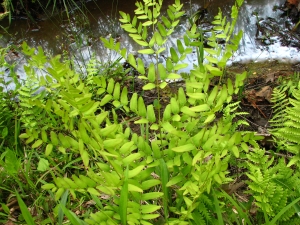 |
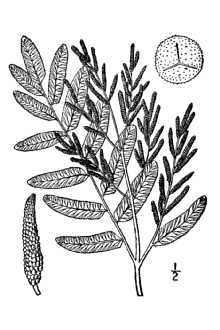 |
Photo courtesy Renee Brecht |
Britton & Brown |
| Botanical name: | Osmunda regalis |
| Common name: | royal fern |
| Group: | fern |
| Family: | Osmundaceae |
| Growth type: | forb/herb |
| Duration: | perennial but deciduous |
| Origin: | native |
| Plant height: | 2-6' |
| Foliage: | stipe is smooth, slender and pale green or tan; grows in a symmetrical clump. Two types of fronds: fertile and sterile. Fronds are doubly compound with wide spaces between leaflets and subleaflets. |
| Spores: | spores are found on the dark green fertile leaflets at the end of the fronds rather than on the underside of the leaves as most ferns do. |
| Flowering time: | mature spores mid May to mid June. Immediately afterwards the fertile portion withers and dies, but usually persists for some time (Stone, 124) |
| Habitat: | wet, usually acid soil of woods, bog margins and swamps |
| Range in New Jersey: | statewide, especially common in northern uplands. |
| Heritage ranking, if any: | n/a |
| Distribution: | 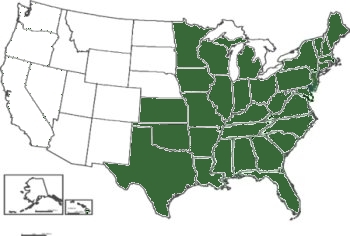 |
| Misc. | O.
regalis is wind dispersed or can be propogated by
dividing rhizomes. The fibrous roots are used in the potting
of various orchids. Osmunda, the Saxon god Osmunder the Waterman. Legend says that he hid his family from danger in a clump of Osmunda. regalis, Latin, "royal" |