Rosa rugosa
 |
 |
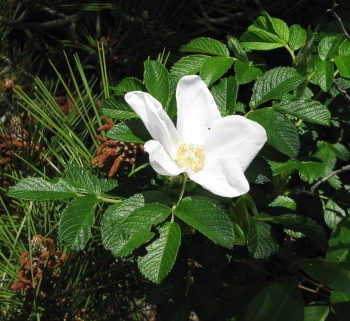
white form- Photo Courtesy Renee Brecht |
USDA Plants Database |
| Botanical name: | Rosa rugosa |
| Common name: | rugosa rosa; beach tomato |
| Group: | dicot |
| Family: | Rosaceae |
| Growth type: | subshrub |
| Duration: | perennial |
| Origin: | introduced from Asia |
| Plant height: | 4 - 6' |
| Foliage: | glossy, deep green, with a "wrinkled" appearance (rugosa) pinnately compound leaf comprised of 5-9 leaflets, generally 7; alternate; serrate margins, glabrous above and pubescent underneath. |
| Flower: | generally pink, with forms ranging from white to yellow or purple. Sold as an ornamental. The fruit looks like clusters of cherry tomatoes and are edible. 2-1/2"-3-1/2" across |
| Flowering time: | bloom late May to late June; fruits September |
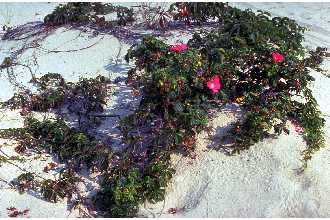
| Habitat: | open, often sandy ground of ocean beaches, roadside |
| Range in New Jersey: | Coastal Plain coast strip |
| Heritage ranking, if any: | n/a |
| Distribution: |  |
| Misc. | R. rugosa hybridizes
easily, and is fairly resistant to rose diseases such as rose rust and
black spot. It also tolerates ocean salt spray. |