Utricularia cornuta
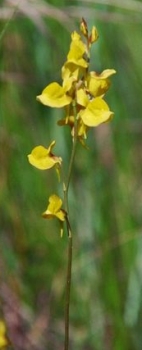 |
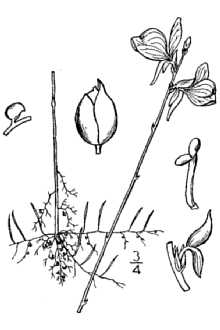 |
Photo Courtesy Renee Brecht |
Britton & Brown |
| Botanical name: | Utricularia cornuta |
| Common name: | horned bladderwort |
| Group: | dicot |
| Family: | Lentibulariaceae |
| Growth type: | forb/herb |
| Duration: | perennial |
| Origin: | native |
| Plant height: | 2 - 12" |
| Foliage: | leaves are tiny and threadlike, underground and not usually seen. Tiny bladders originally thought to float the plant actually trap and digest very small invertebrates, opening when trigger hairs are disturbed and suddenly sucking in water and any invertebrates (i.e., they are carnivorous). Digestion takes approxiamately 15 minutes to 2 hours. The "bug soup" is then extracted into the stem, clearing out the bladder's vaccuum and resetting the trigger hairs. Mary Treat of Vineland, an early female scientist, did much research on Utricularia and was one of the first scientists to suspect that the bladders were actually traps for tiny creatures rather than air flotation devices. |
| Flower: | 1/2", yellow, resembling a snapdragon |
| Flowering time: | late June to late August |
| Habitat: | wet, sandy or peaty ground of bogs, depressions |
| Range in New Jersey: | throughout the pine barrens, and local in the north Delaware Valley |
| Heritage ranking, if any: | n/a |
| Distribution: |  |
| Misc. | Witmer Stone, 1910 describes Utricularia as "particularly characteristic of the New Jersey pine barren bogs." (689) Utricularia, Latin, "raft floated on bladders", cornuta, Latin, "horned", referring to the spur on the flower. |